
Age 8 to 18
A clear answer as school gets more demanding
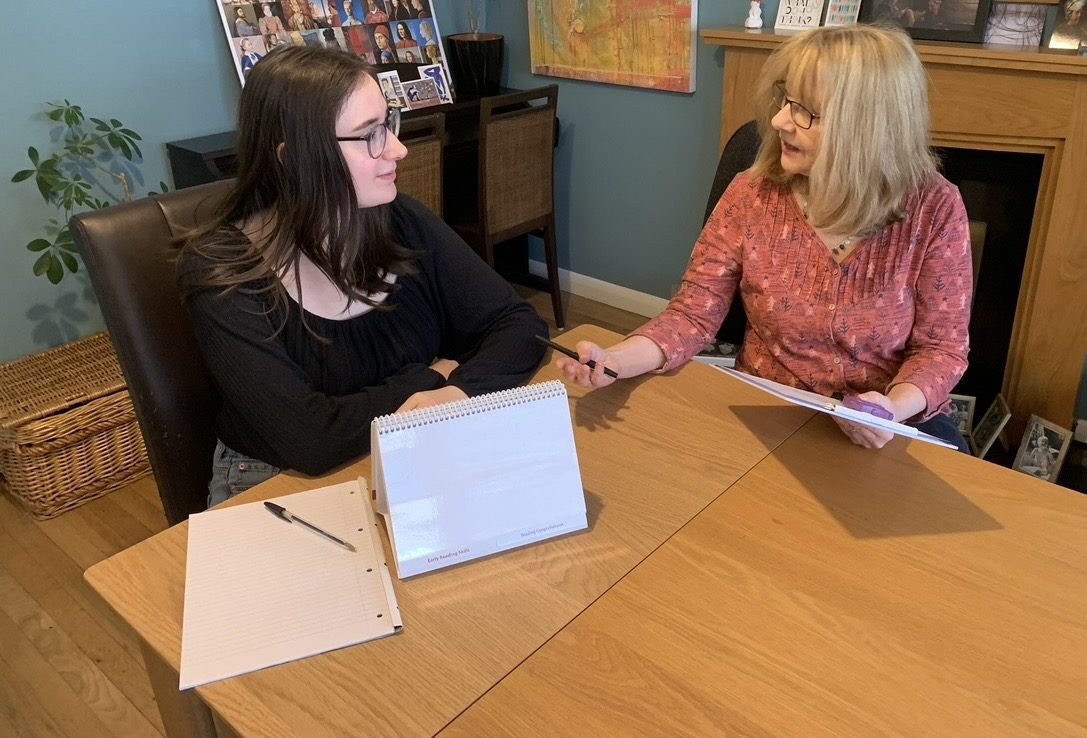
In the years leading up to the end of primary or prep school, parents can often have a feeling that their child’s learning is not quite developing as easily as it might.
Why now
Why families come at this age
The secondary or senior school years are approaching and they want to maintain their child’s confidence and make sure that they’re ready for the years ahead. Once at secondary school, the increased demands of the curriculum can sometimes bring into focus challenges with note taking, keeping up with lesson content and coping with longer and more complex texts.
Sometimes, it is only when GCSE and A Levels approach that bright children sense that they are working harder than their friends but don’t seem to be finding things as easy.

What is assessed
Four areas, one clear picture
Language and Reasoning
How your child works with language and solves problems. This is the baseline the rest of the picture is read against.
Literacy
Reading, phonics, spelling and writing. Accuracy, fluency and understanding, from single words to whole pages.
Processing and Memory
Holding verbal information in mind and working with it.
Maths, if of interest
If you would like me to look at Maths too, I can look at fluency, numeracy and problem-solving. If I suspect that a fuller exploration of Maths would be helpful, I refer you on to a colleague.
Start to finish
Three steps, start to finish
A free 30-minute chat
We talk through your worries and whether an assessment is the right next step. No charge, and no pressure.
The assessment
A full, unhurried session in a quiet room, with breaks whenever they are needed. Most assessments take around two and a half hours.
A 45-minute video call
We go through the findings together, before the report is finalised, so you know exactly what everything means.
The fee
What the fee includes
- The free 30-minute consultation
- The full assessment session
- Liaison with your child’s school
- The SASC-compliant diagnostic report
- The 45-minute video call, line by line
£595
No extras, no surprises.
Payment in full secures your booking, and instalments can be agreed in advance. Full booking terms, including cancellation and rescheduling, come with the booking form.
The day itself
Welcomed at the door
You and your child are welcomed at the door. The assessment typically takes around two and a half hours, in one session, in a quiet, well-lit room, with breaks whenever they are needed.
There is no rush, and nothing to revise for. The day is built so that your child can show what they can do, comfortably and at their own pace.
While you wait
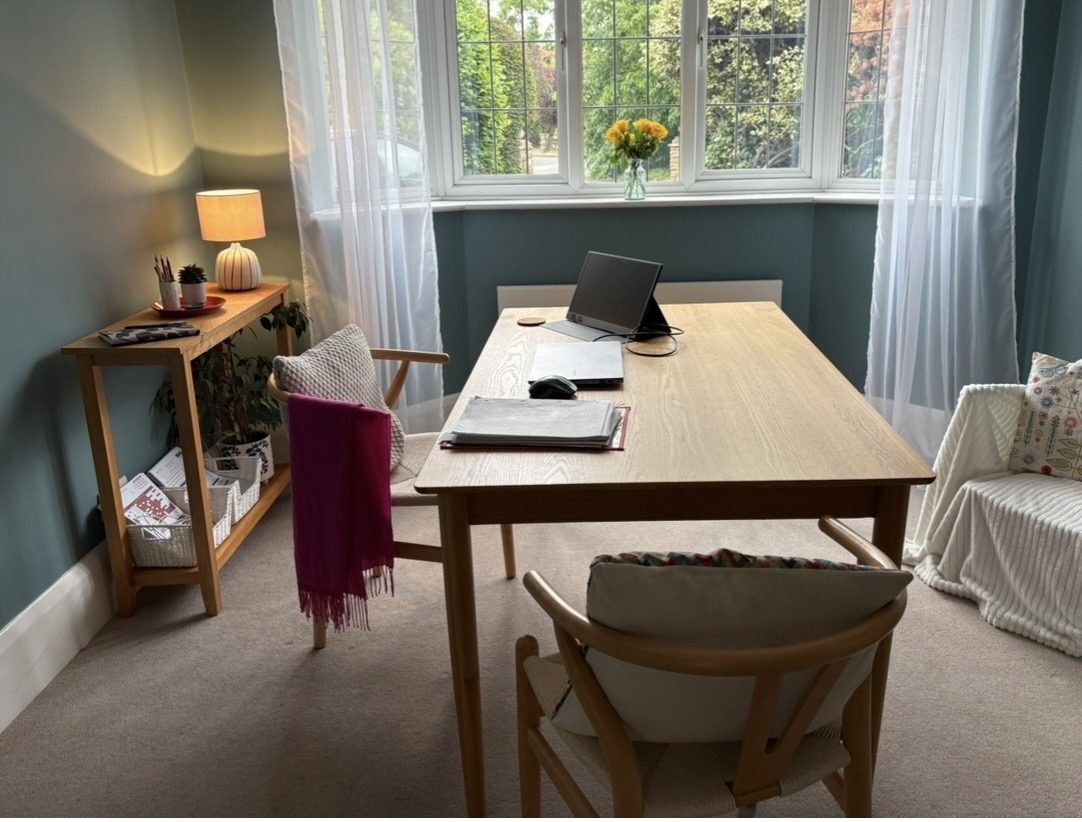
A comfortable place to wait
For parents who prefer to stay, there is a comfy lounge where you can connect to WiFi. If you prefer, I can call you about 30 minutes before we finish so that you can set off to collect.
Afterwards
We talk it through together
We have a 45-minute video call so that I can talk you through the report and what it means for your child, and I’m happy to answer any follow-up questions by email.
The report
The report, and what it can do
Normally within two weeks, you receive a full diagnostic report, written to the current SASC guidelines: the standard that schools and universities expect.
The report is yours. Schools recognise it, and it is accepted for DSA Needs Assessments at university. For exam access arrangements, it can help identify difficulties and provide useful evidence, though under JCQ regulations, it is the responsibility of schools to determine which adjustments are appropriate, drawing on a range of evidence.
Then we talk it through. The included 45-minute video call walks you through the findings, line by line, before the report is finalised.
Standardised test scores tell you exactly where your child sits in comparison to others of the same age, and these are combined with the background information and observation of how your child went about the tasks. The assessment highlights areas of strength, as well as identifying any areas of underlying difficulty which might explain why things might not be developing as expected.
Inside the report
- Diagnostic Decision
- Background
- Test Conditions
- Cognitive Presentation
- Attainment
- Recommendations
- Appendices
What the report supports
SATs, entrance exams and university
About SATs
A diagnosis of dyslexia is not necessary for adjustments in the SATs, but a report can supply useful background information for teachers in the run up to the tests. The current guidance is published as the KS2 access-arrangements guidance on gov.uk.
About senior school entrance examinations and 11+
For senior school entrance examinations including 11+, schools are able to put access arrangements in place for children with dyslexia or other learning differences. For those with dyslexia, a full assessment report, with recommendations, is usually required. The arrangements may include additional time or other adjustments depending on the school’s criteria and the needs of the child. It is best to contact the admissions teams at the schools you are applying to, as they will be able to advise on what support is available and how to apply.
About DSA, the Disabled Students’ Allowance
A young person with dyslexia, who has a full report issued by someone with an APC, can apply for a Needs Assessment for the Disabled Students’ Allowance (DSA). DSA is government support for students whose condition affects their study. It can cover things like a laptop, extra time, extended library loans and study-skills support. You can read more about the Disabled Students’ Allowance on gov.uk.
Not sure where to start?
A short conversation is the easiest first step. Tell me where your child is, and we will work out whether an assessment is the right move, and when.
Book a free 30-minute chat
Let’s work out the right next step
Tell me a little about your child, and we will find a time to talk. I answer every enquiry personally, usually within a day.
Or call or text 07912 147199, message on WhatsApp, or email info@dyslexia-assessment-surrey.co.uk.